Homages
Reviews by Dr. Domenico Taricco
Giorgio Morandi
Western art has stimulated a pictorial and stylistic education to surface, filing down an entirely natural and fundamentally original feeling.
As Rapetti herself states: “…by copying the works of these 20th-century masters I was able to perfect the figurative technique of my paintings. Great gratitude to them… they don’t know it but…” they continue to live through her creative dedication, transforming what is apparently natural into something deeper.
Yet, I would add: “I believe that in any form or cosmic materialization of time, they already know it!”
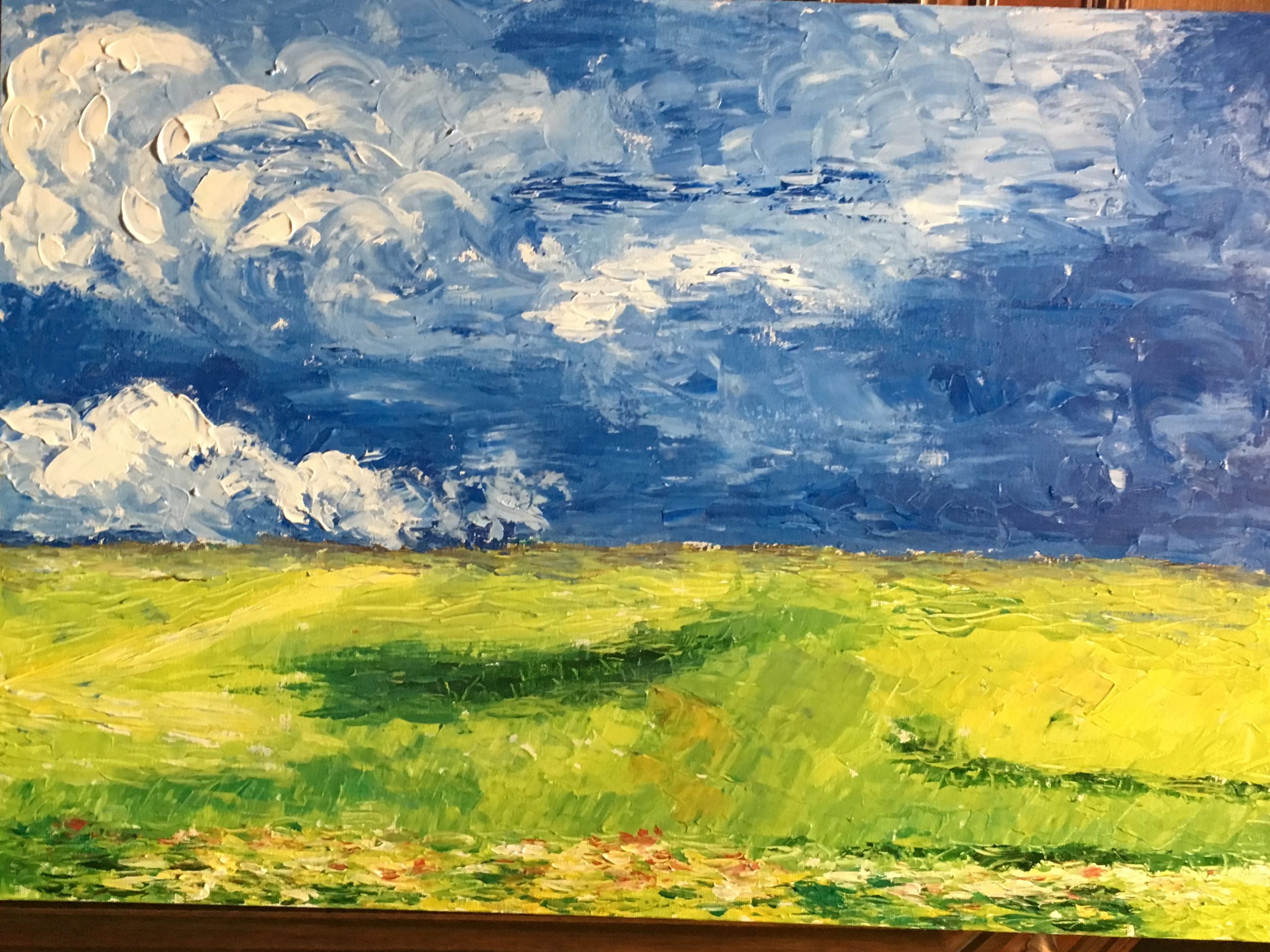
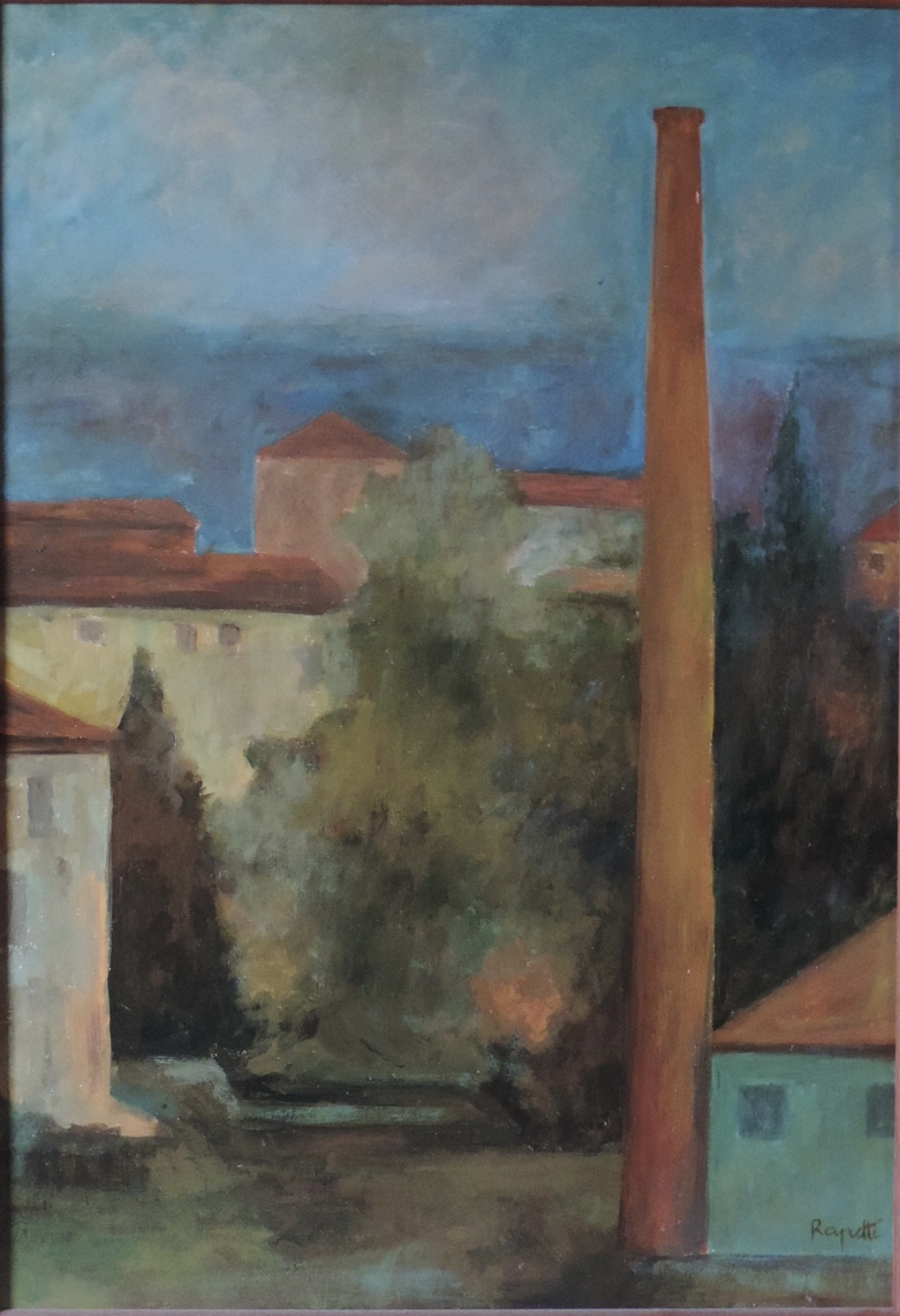
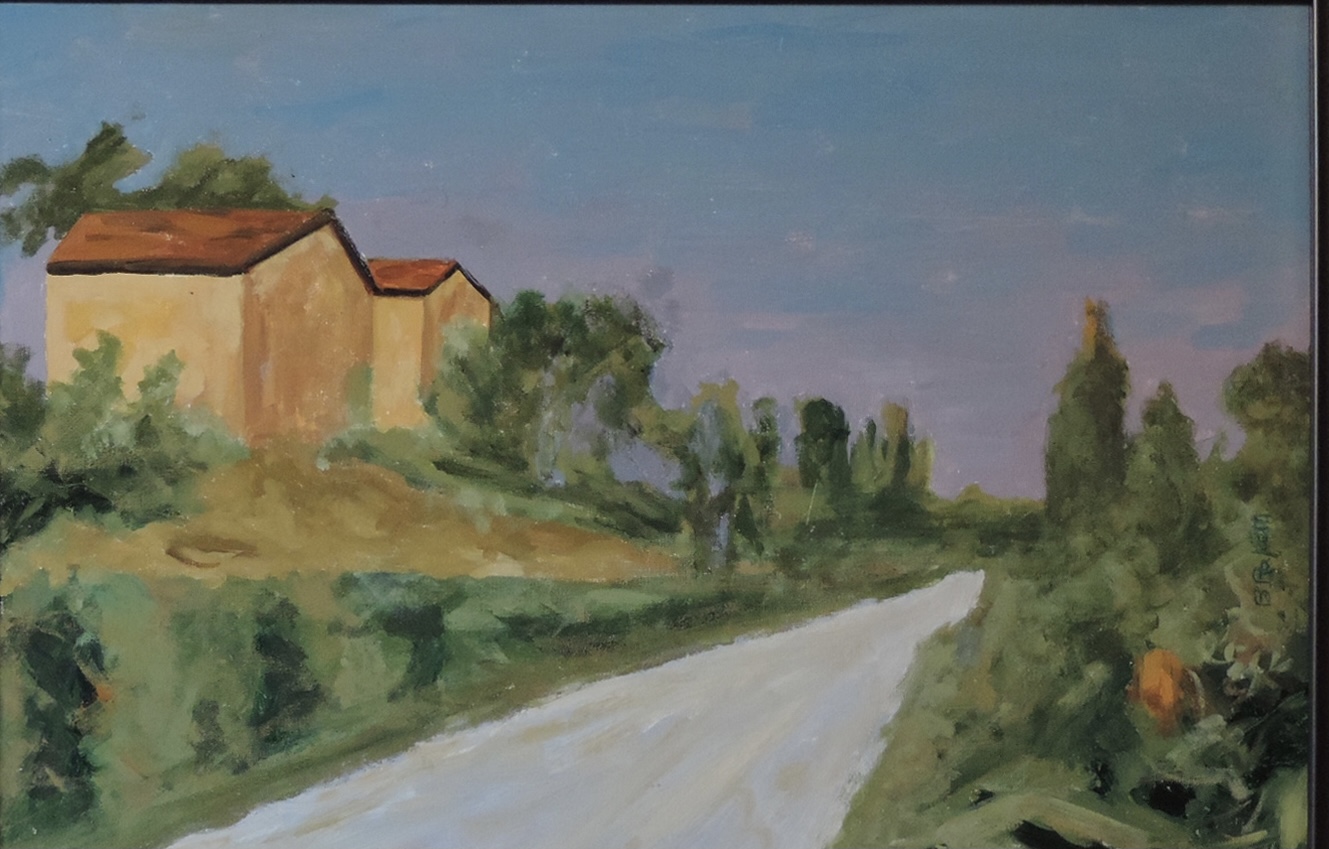
As for the Homages to Morandi, we witness a series of Landscapes that embody the style beyond the technique of the Bolognese master.
As Giorgio Morandi himself stated: “To express what is in nature, that is, in the visible world, is the thing that interests me most”.
And Rapetti has done so and continues to carry it out technically in her artistic practice. Feeling things beyond their appearance but starting from it as it manifests itself and transmitting it transformed and purified.
Because our artist performs a further operation of analytical purification of what is exterior, internalizing the ephemeral state of nature to the point of sublimating it through painting.
Morandi was in fact devoted to still lifes but amplified them by exhibiting with the Futurists and becoming, with Carrà and De Chirico, one of the greatest exponents of the metaphysical school. But he consequently approached the Valori Plastici group, recovering precisely the physicality of things. As well as a master engraver, he outlined an unprecedented physical path, always using less variety of colors.
Characteristics that determined the sobriety of forms on the edge of an entirely unique and particular surreality.
This coexistence between poetic dimension and reality are characteristics that distinguish the pictorial maturity of Rapetti who, right from these evocative works, refers to the dryness, synthesis, and spirituality inherent in things.

André Derain
Another series of Homages is dedicated to the French painter André Derain. We know of this painter that he had been started on engineering studies and that through the knowledge of artists such as Henri Matisse or Maurice de Vlaminck he decided to undertake the path of art, exhibiting in 1905 at the Salon d’Automne and the Salon des Indépendants in the group of the Fauves-the wild beasts. Besides following the primitivist conceptions of Paul Gauguin, he detached himself from the Fauvist connotations as well as from the Cubist ones incited by his friend Picasso. The Return to order would bring back into vogue the perspective of chiaroscuro, crossing the compositional paths of Morandi. Characteristics that led him to the so-called Gothic/primitive period from which he moved towards Dadaist and Surrealist provocations.
These historical premises define a particular pictorial path articulated by very complex stylistic influences that Rapetti was able to face during her training.
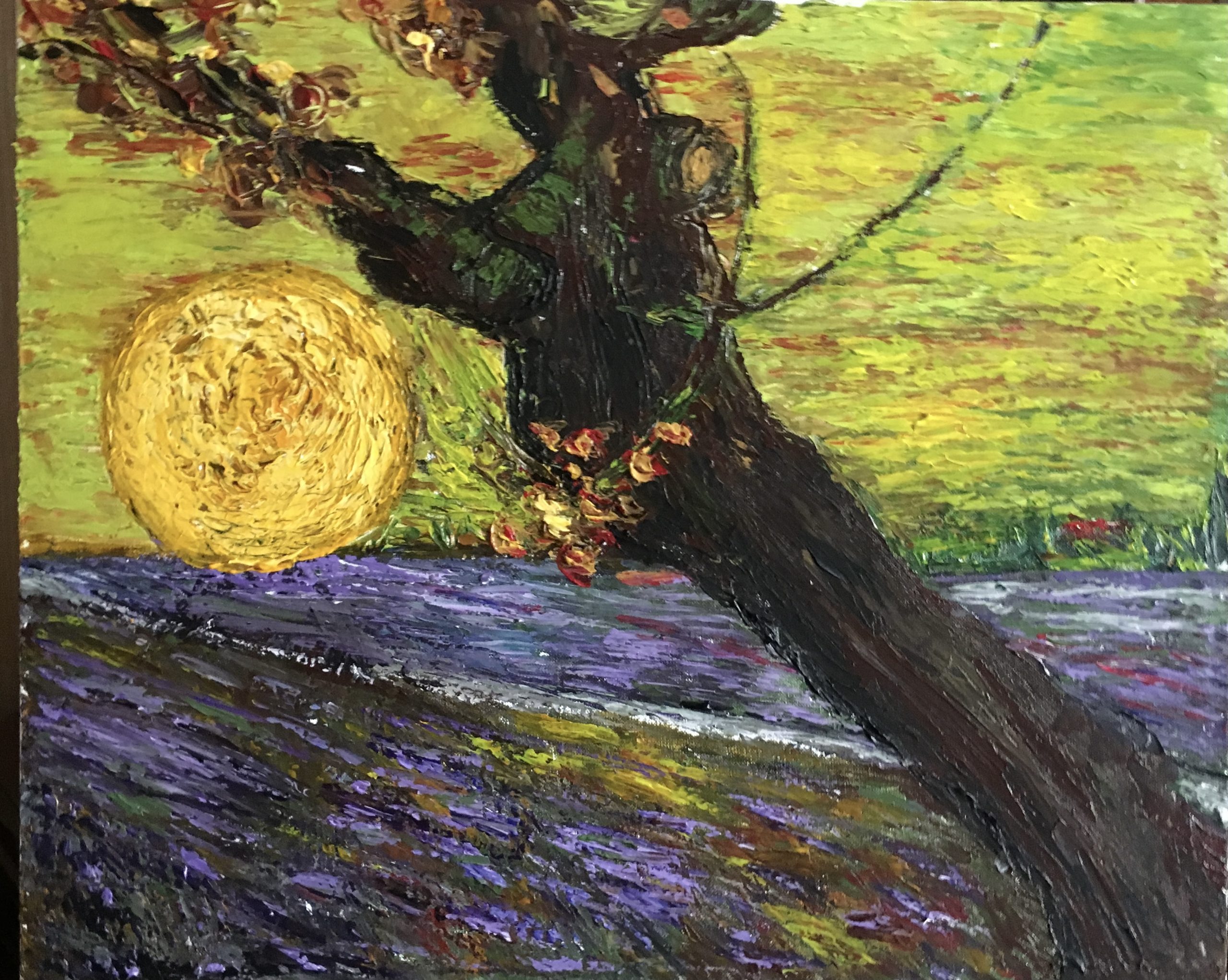
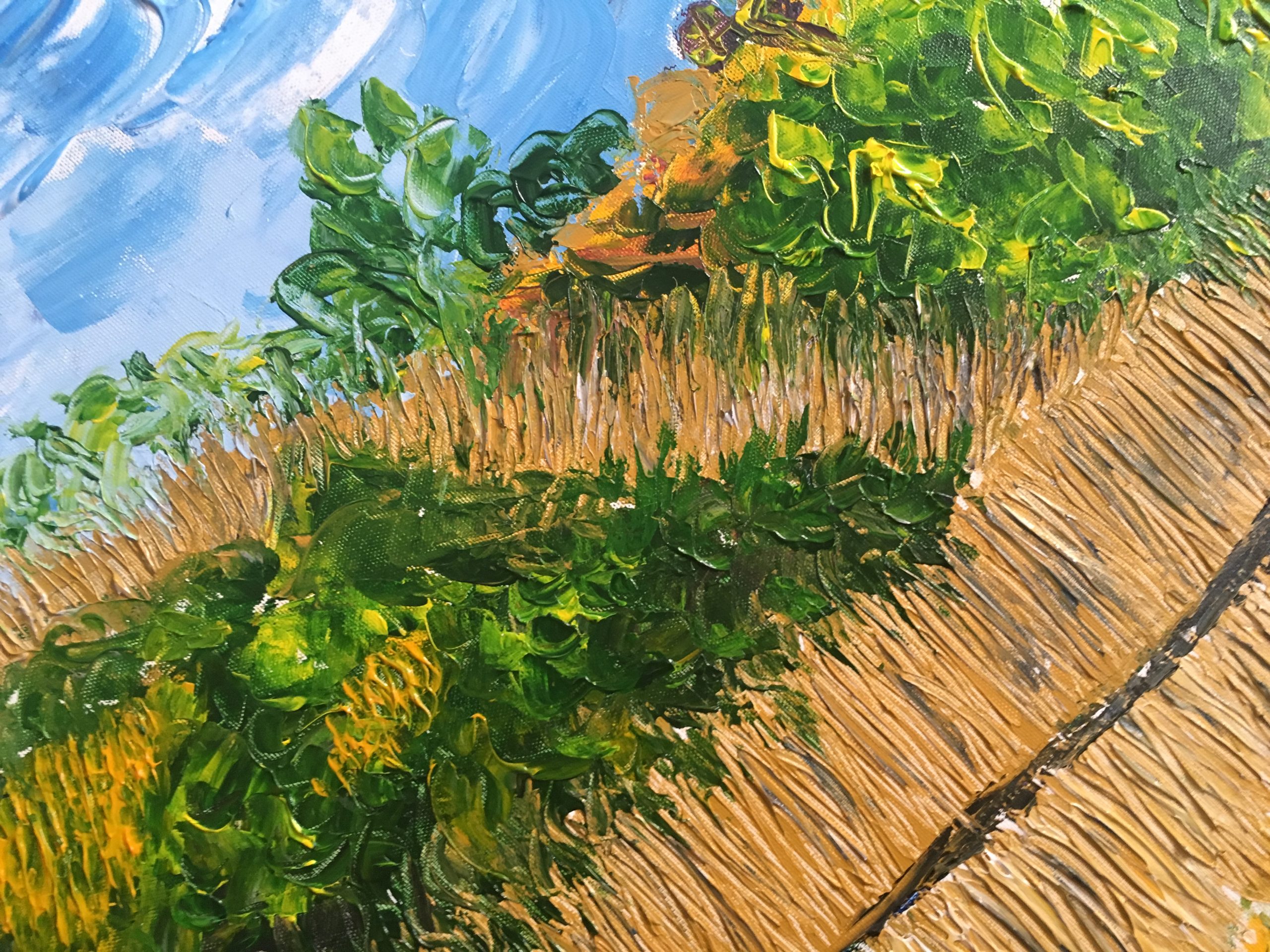
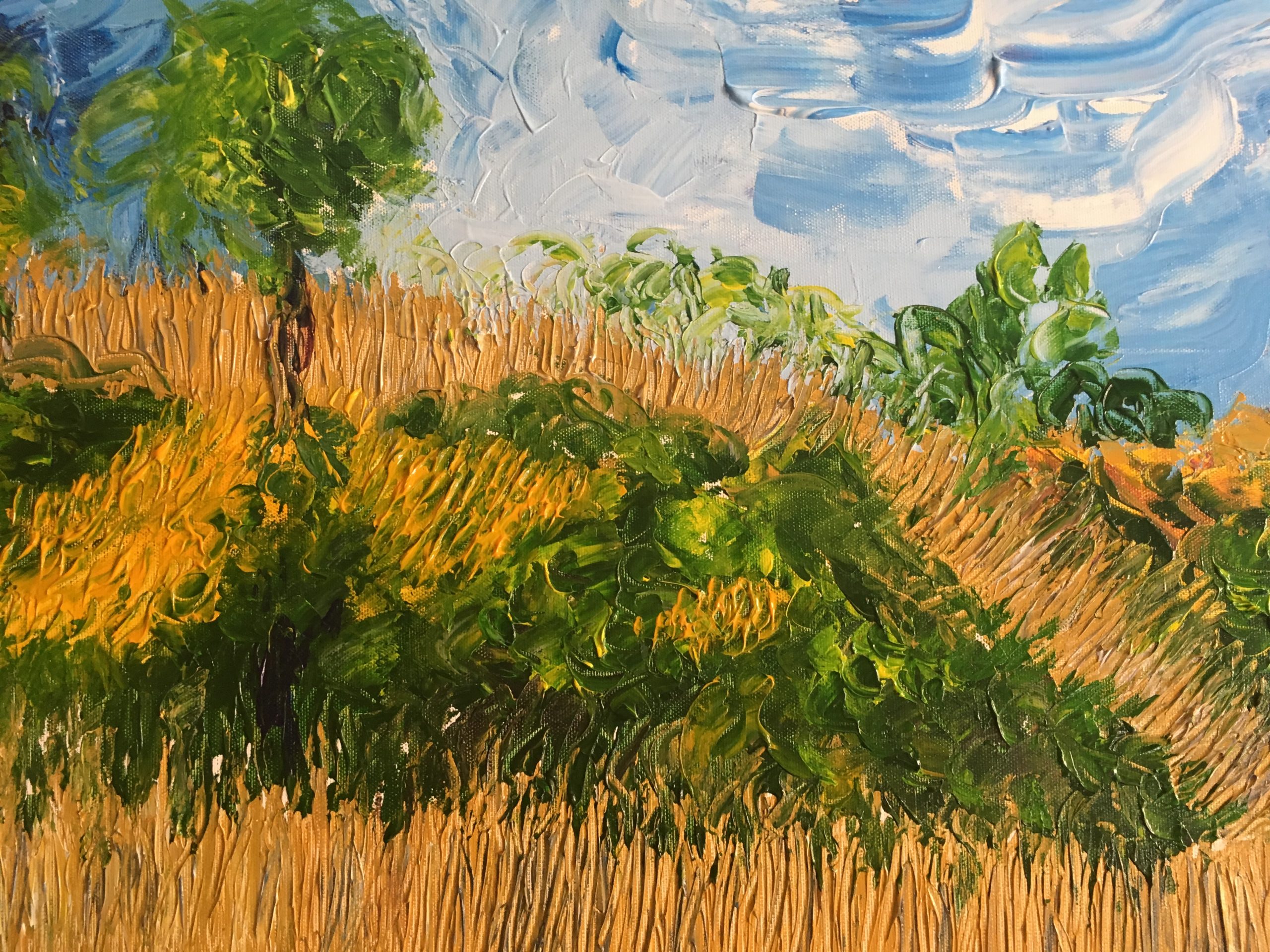
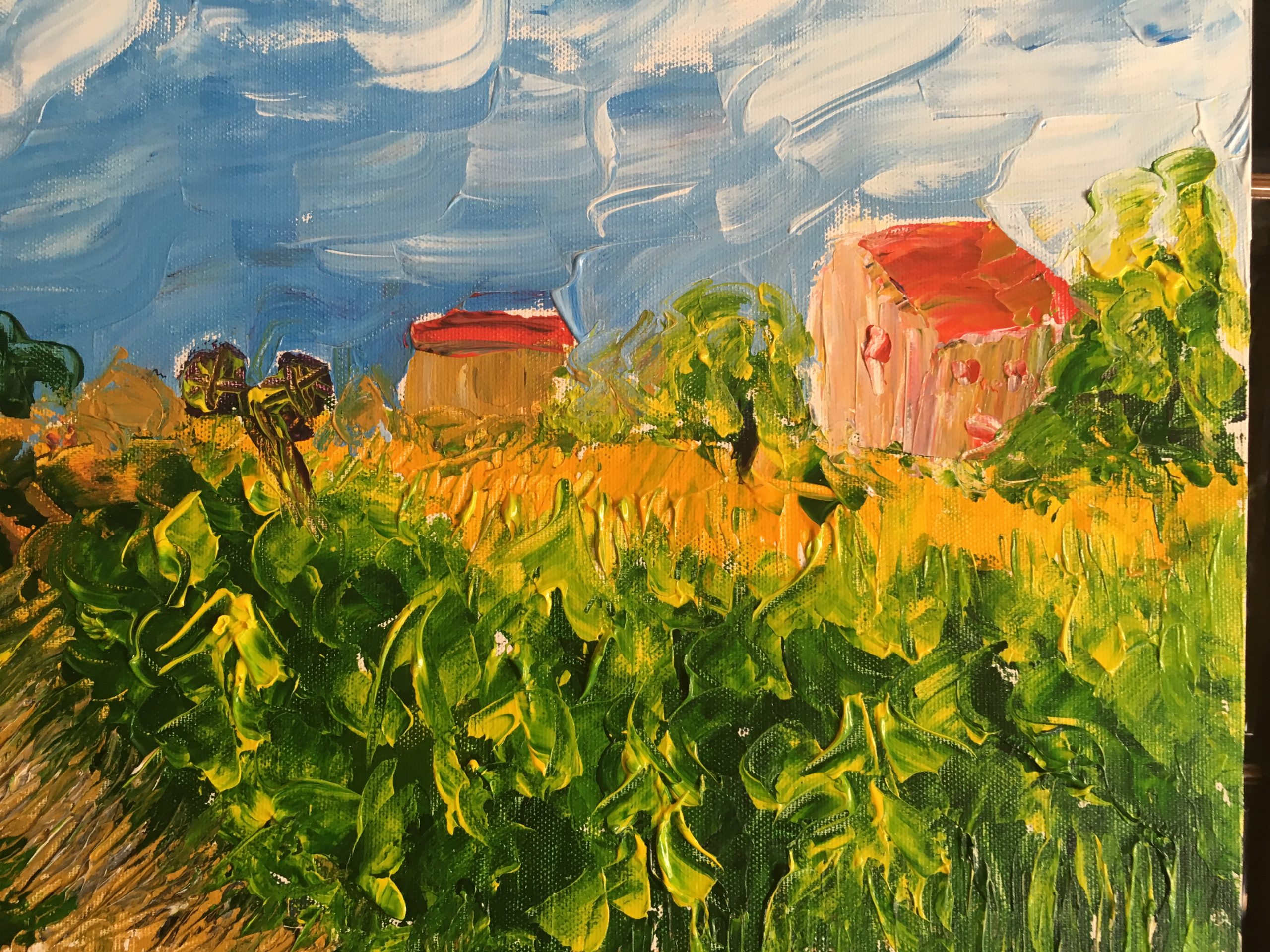
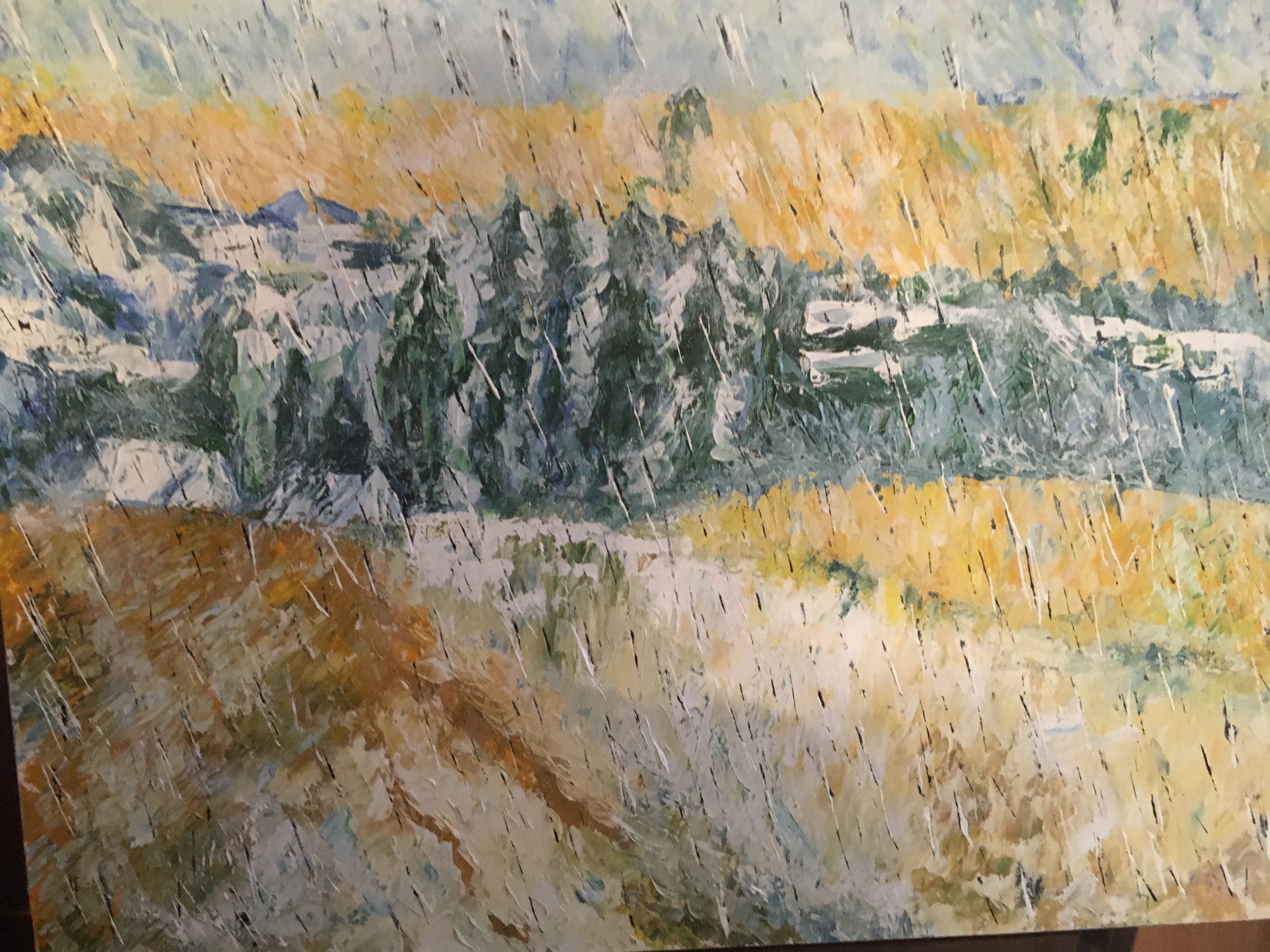
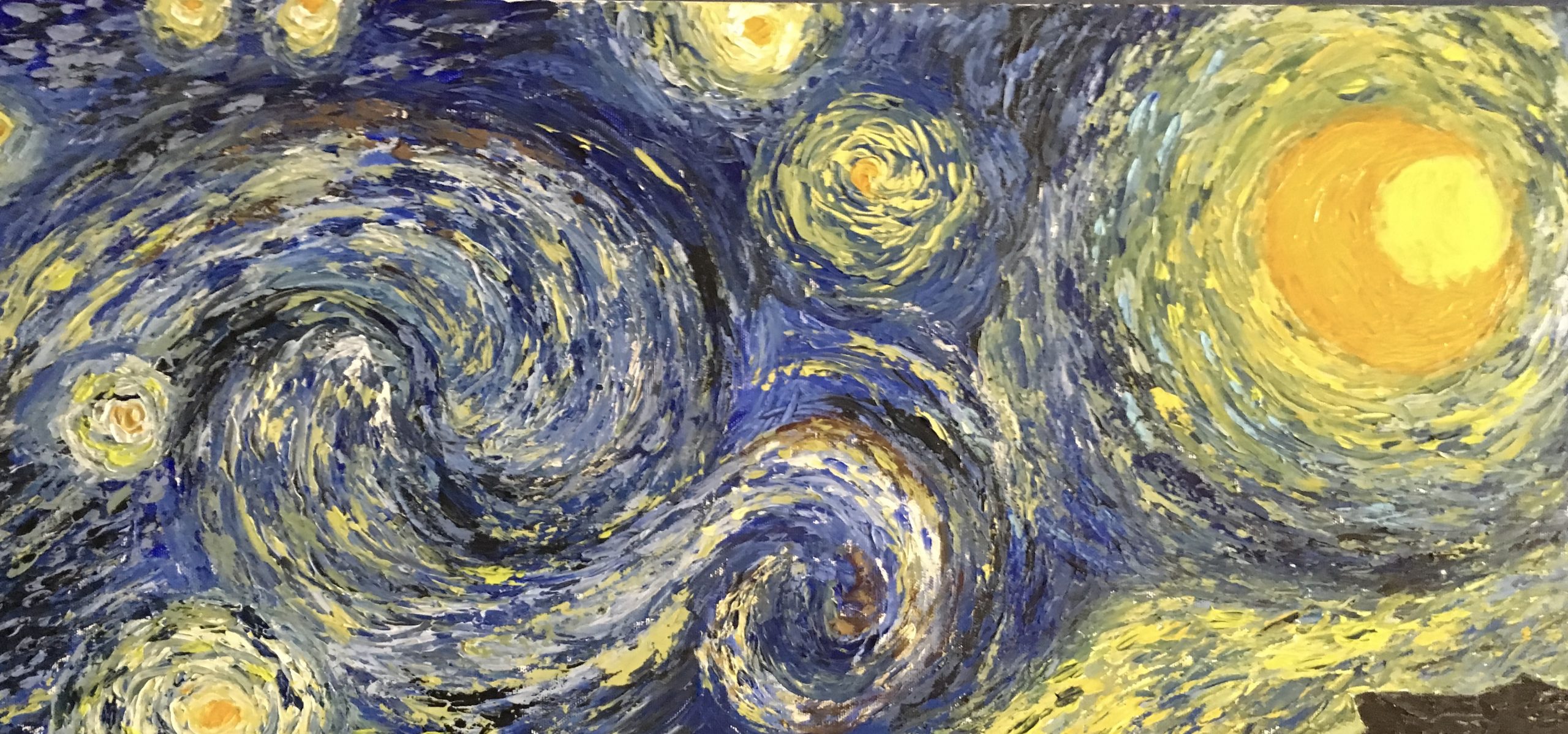
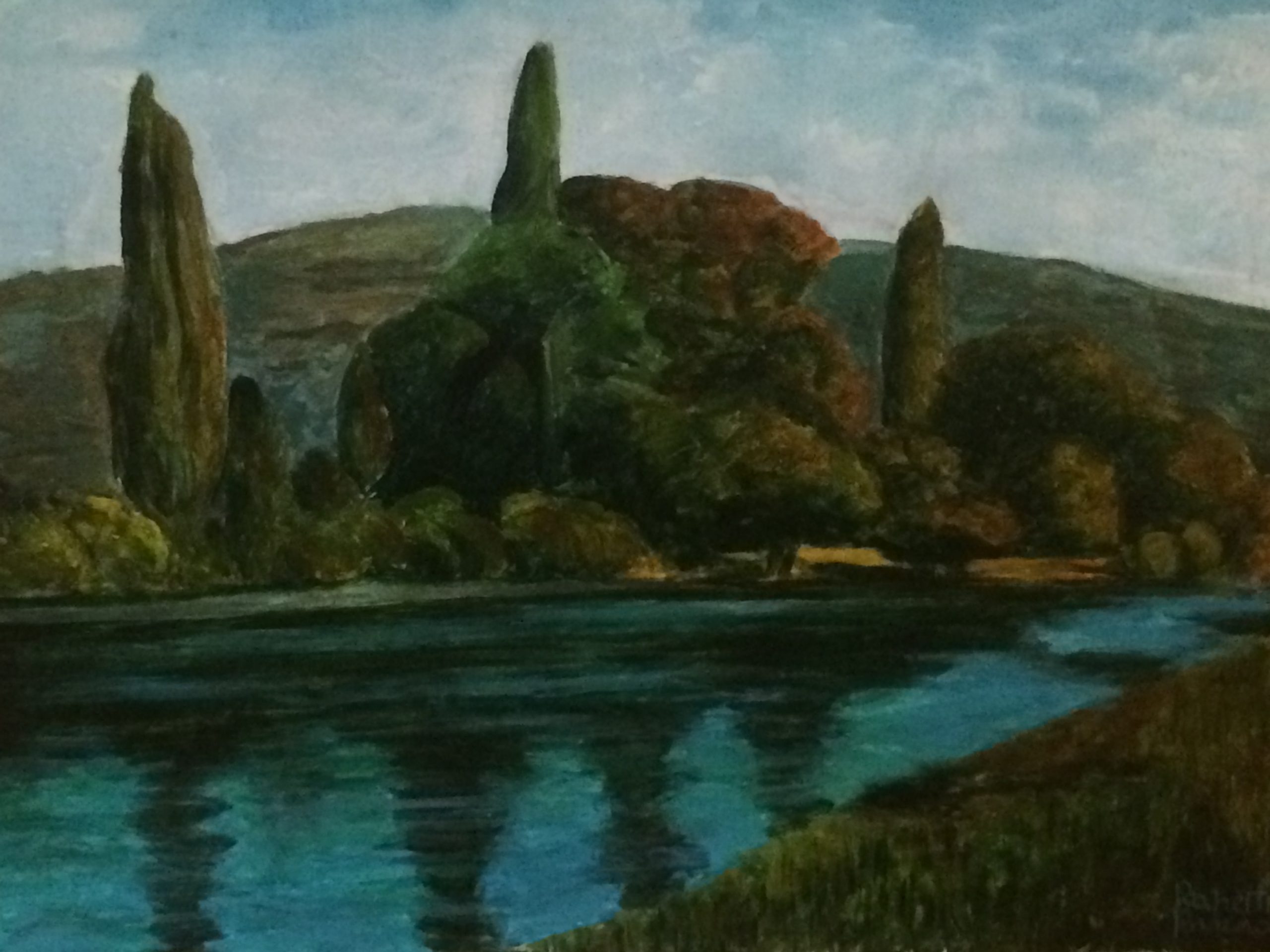
Let us think of the Bord de Seine à Chateau, in which it seems to return to those Neo-Impressionist formulations echoed by sacred monsters of the pictorial universe such as Vincent van Gogh and Paul Cézanne.
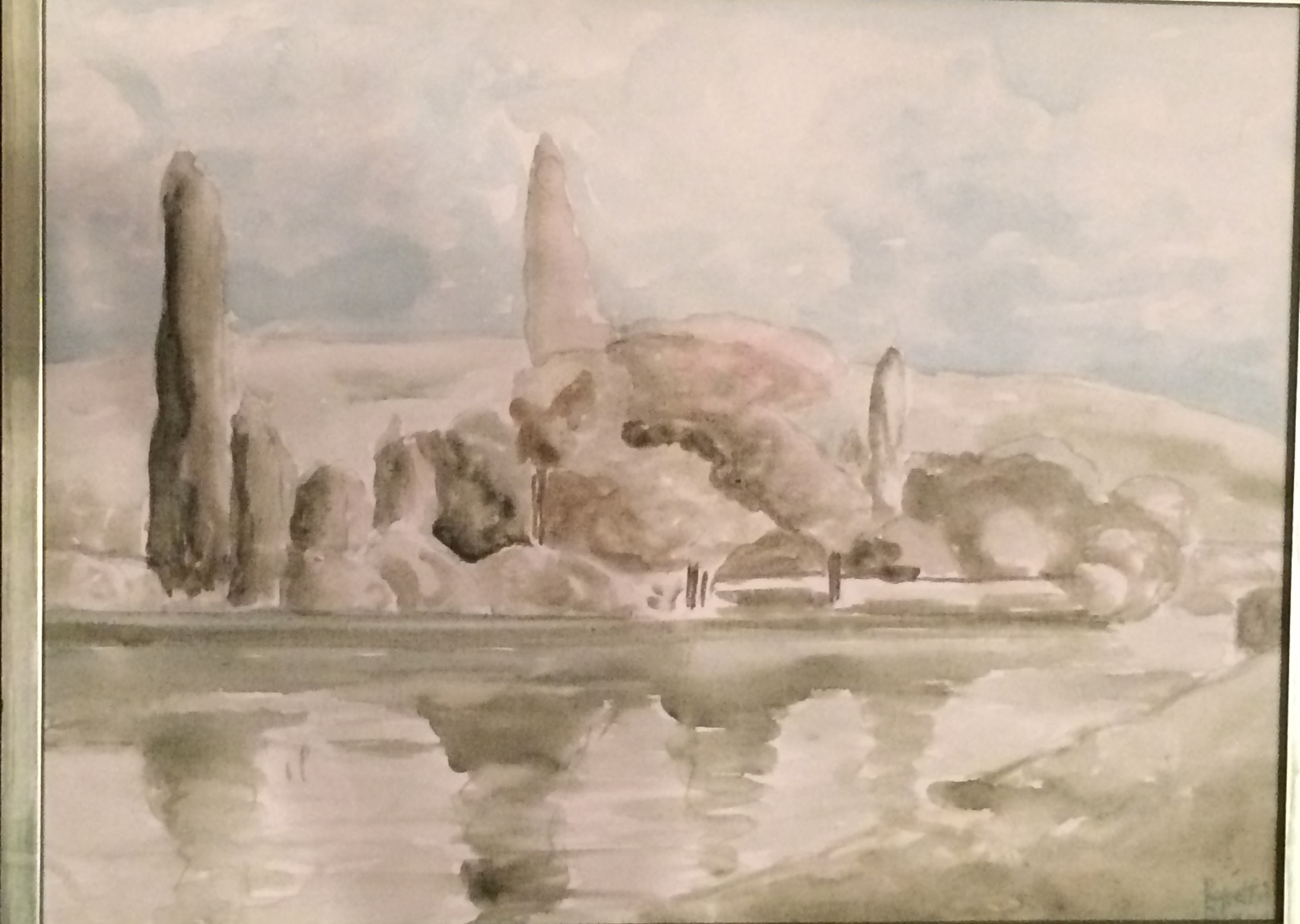
Here Rapetti restores to the work luminosity, serenity, and classical naturalism in which formal balance is central through a measured style in which she really seems to approach cold colors to warm ones in a Fauvist way through the powerful use of brushstrokes, thus making visible the preponderance of formal juxtapositions. The same applies to the watercolor or to the copy of the work entitled Villeneuve les Avignon.
Auguste Chabaud
For Auguste Chabaud the discourse is also analogous.
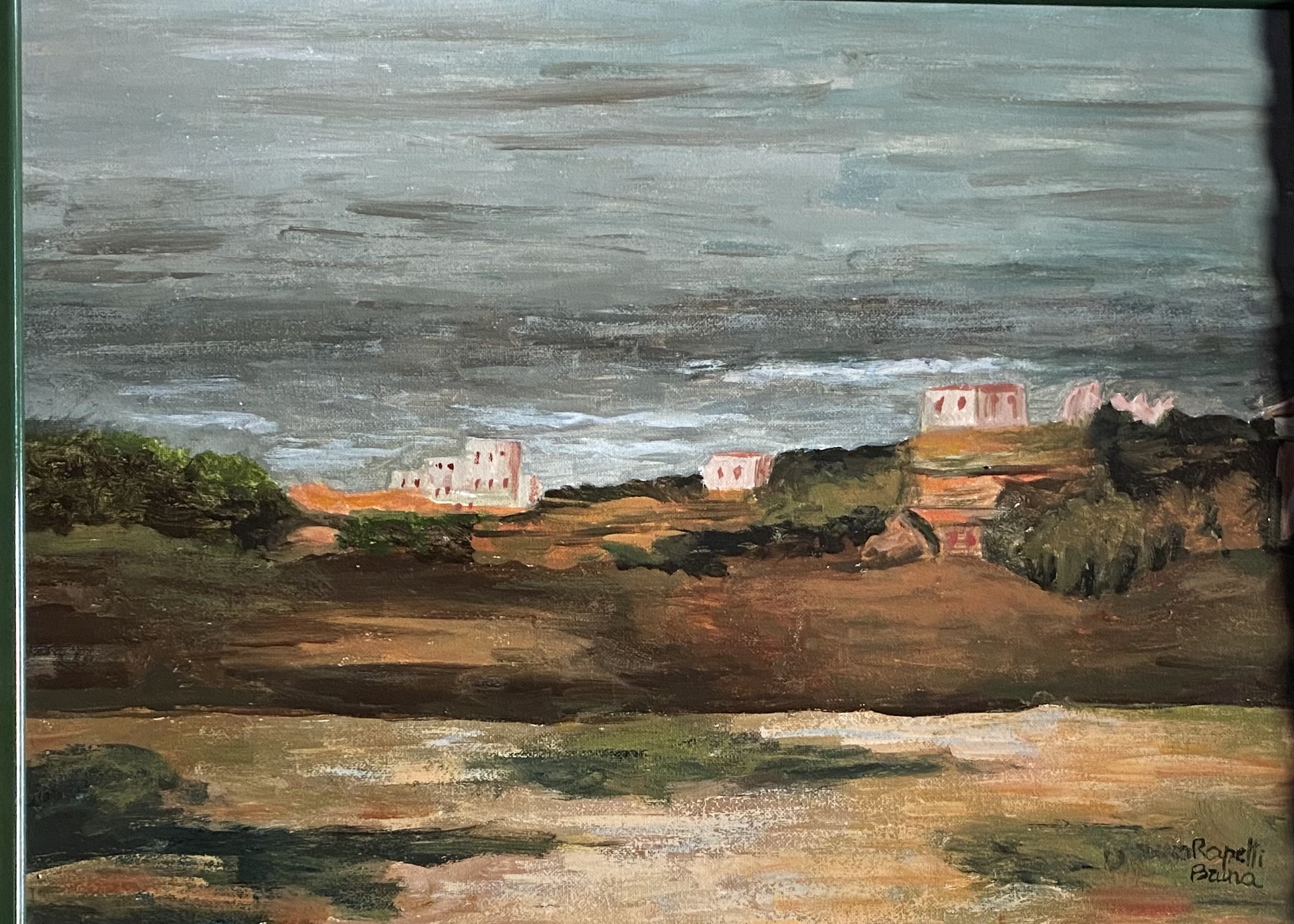
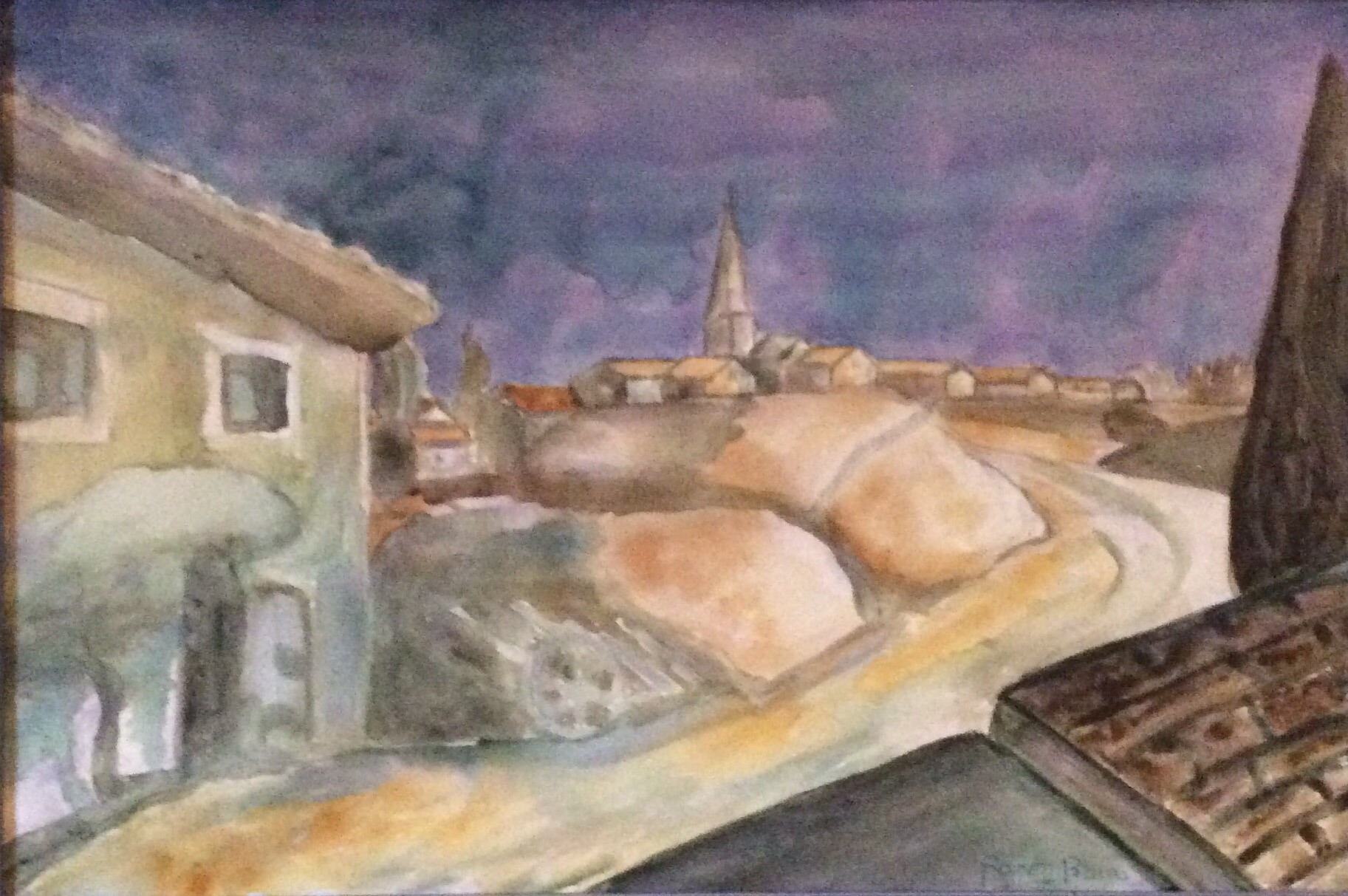
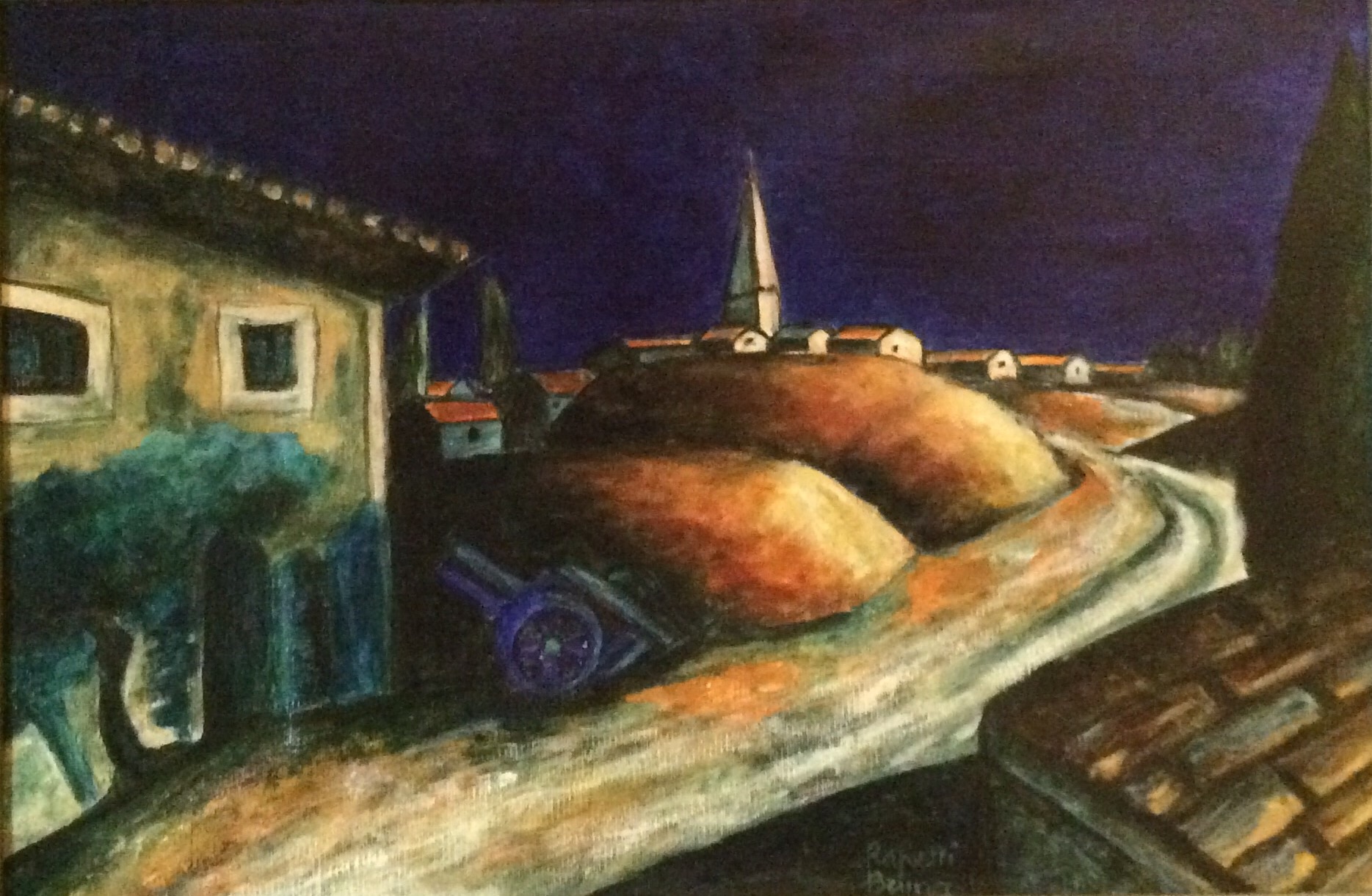
The series of Homages to Chabaud allow us to come into contact with an artistic experience further projected towards the fragmentation of form up to its reconstruction. We know of Chabaud that while still young he entered the Ecole des Beaux-Arts in Avignon where he too met Henri Matisse and André Derain himself. Among his travels and vicissitudes he lived through the Cubist period until the post-World War I period which led him to use Prussian blue as the only color of his works. We witness this plasticity in works such as Les meules près de la maison, in which Rapetti further investigates the formal connotation through drier chromatics compared to those of the previous artists.
Elements that on a more discursive level also emerge from the lightness of the Watercolor of the same work in which it is possible to admire its compositional impact through the harmony of forms.
Experiences of three different artists: Derain was born in 1880, Chabaud in 1882, and Morandi in 1890, but their artistic existences crossed for a creative style that aimed to denature the stereotypes of a classicism founded on the imitation of the surrounding nature to the point of embracing a deep desire to cross it through an inner eye in which form dynamized its process following the temporal rhythm of an increasingly dissociated chromaticism from the concrete objectivity of things.
Paths whose essential result was the spiritualization of matter.
Aesthetic connotations that have remained imprinted in the creative logic of Rapetti who, through matter, decants the spirit of the world.
The Homages determine a return of Rapetti to her origins.
A sort of backward journey in time and space, perhaps to the origins of a world that has never been forgotten by her way of being.
We find ourselves in fact before the archetype of the Self in which it is thought, that is, the ratio, that accomplishes its further impulse in the memory of the thinking subject. A thought that tends to rationalize the concrete sense of things, to reflect, to divide, projecting itself towards what will be.
A journey into the depths of a painting that finds in the masters of the past the illuminated path towards the plastic sense of a matter that spiritualizes forms through color, speed, or its position in space.
Here we are in the presence of the ultimate Noble Truth that finds the path of transformation from suffering into joy.
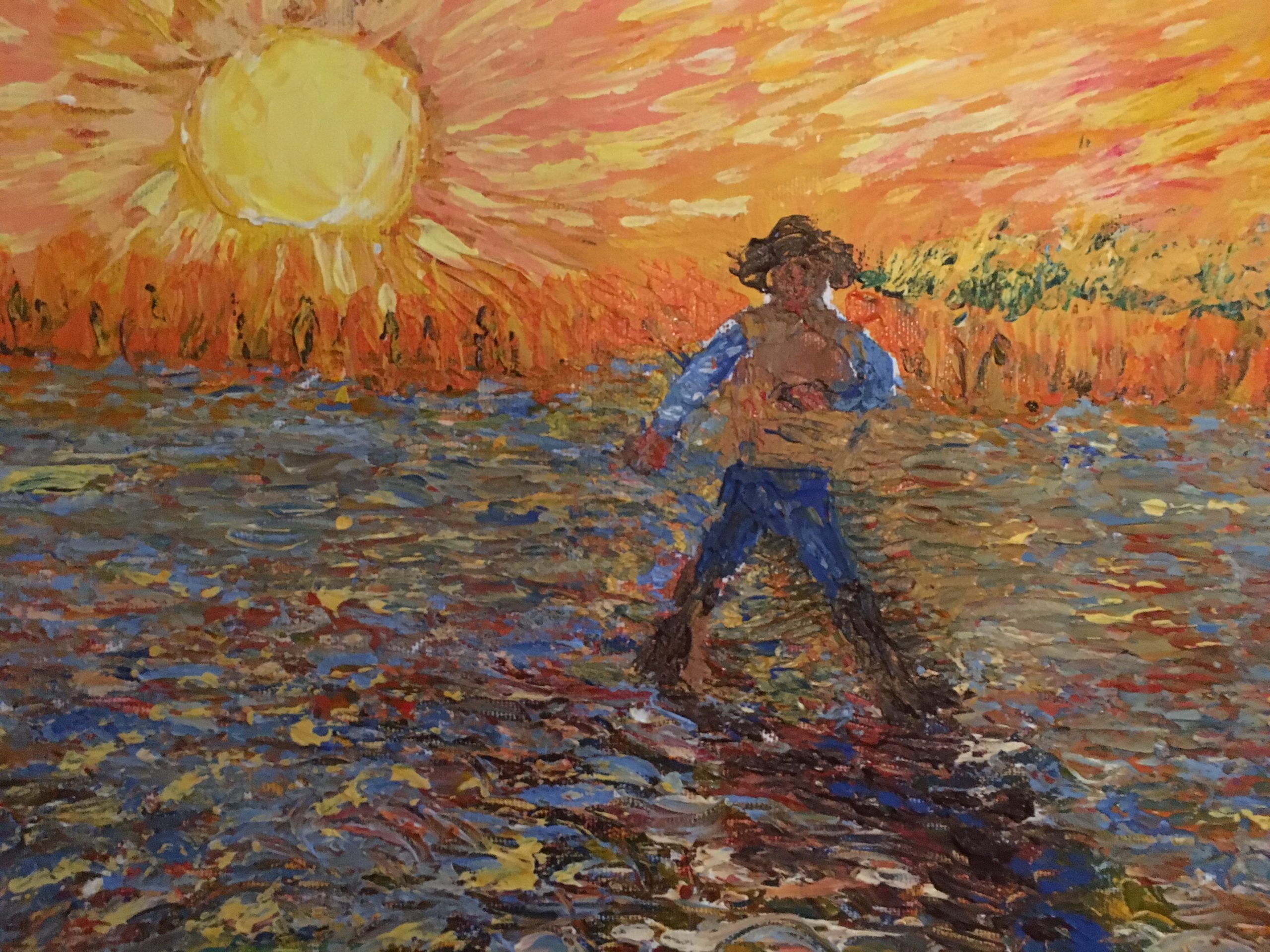
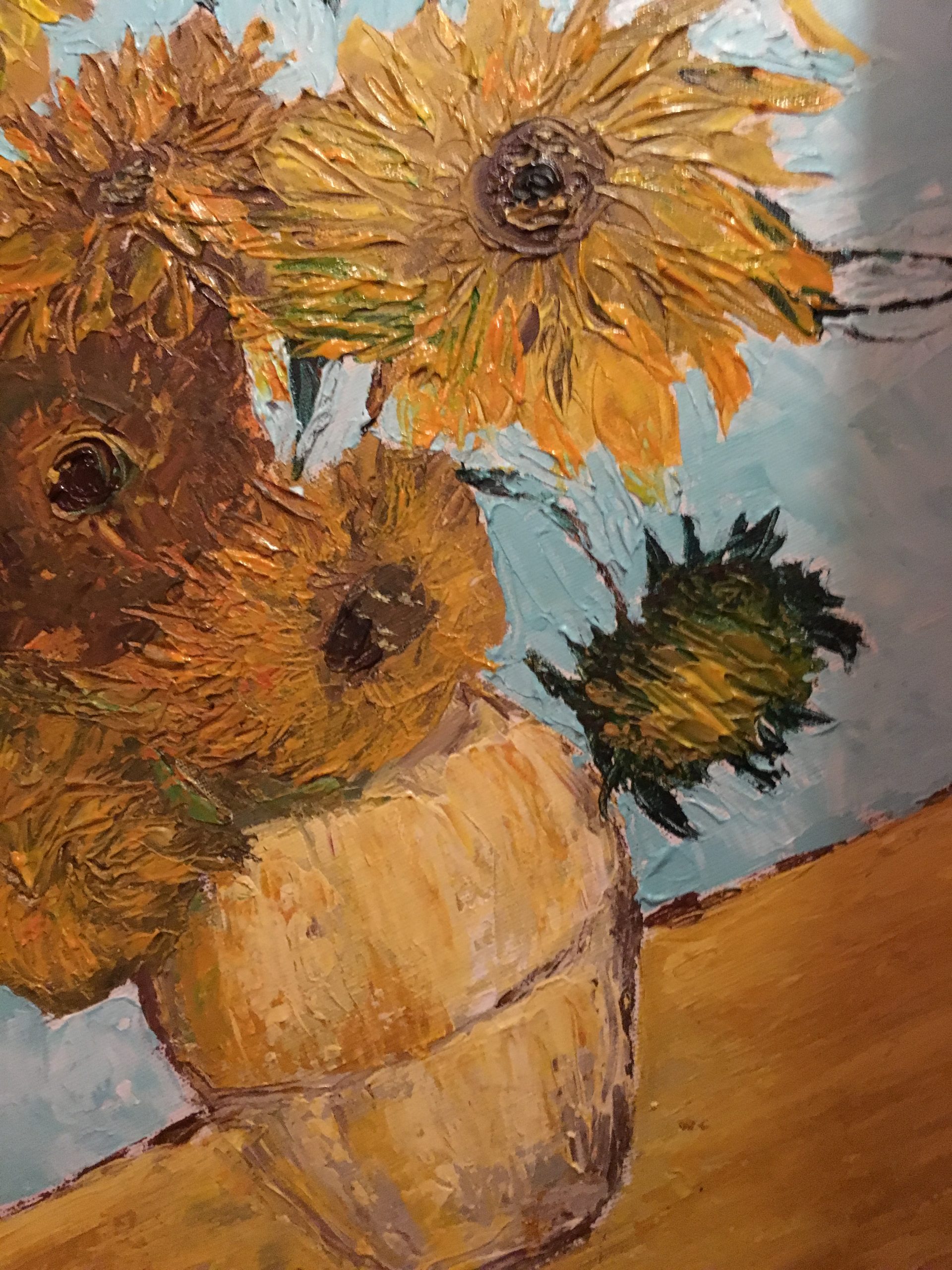
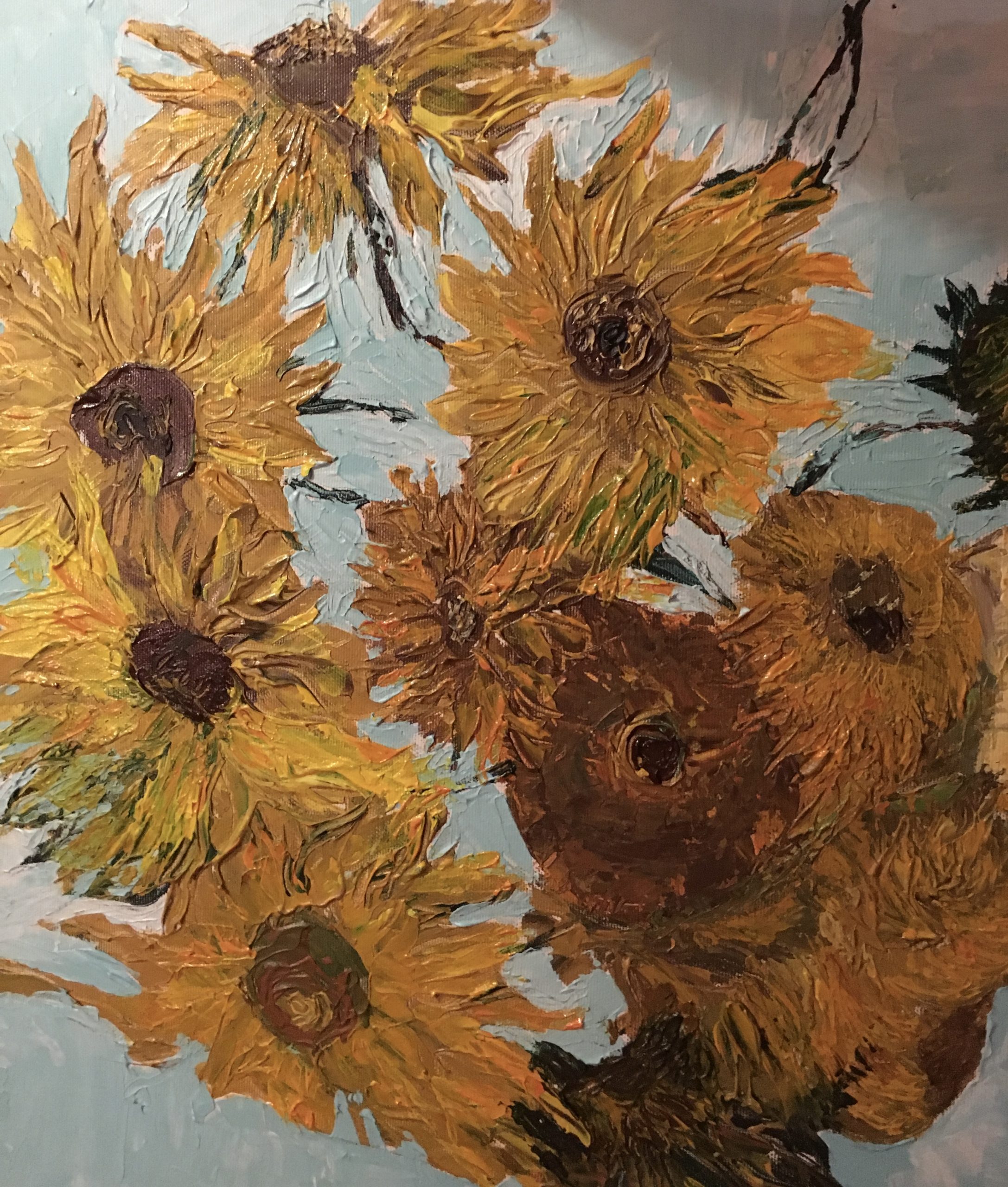
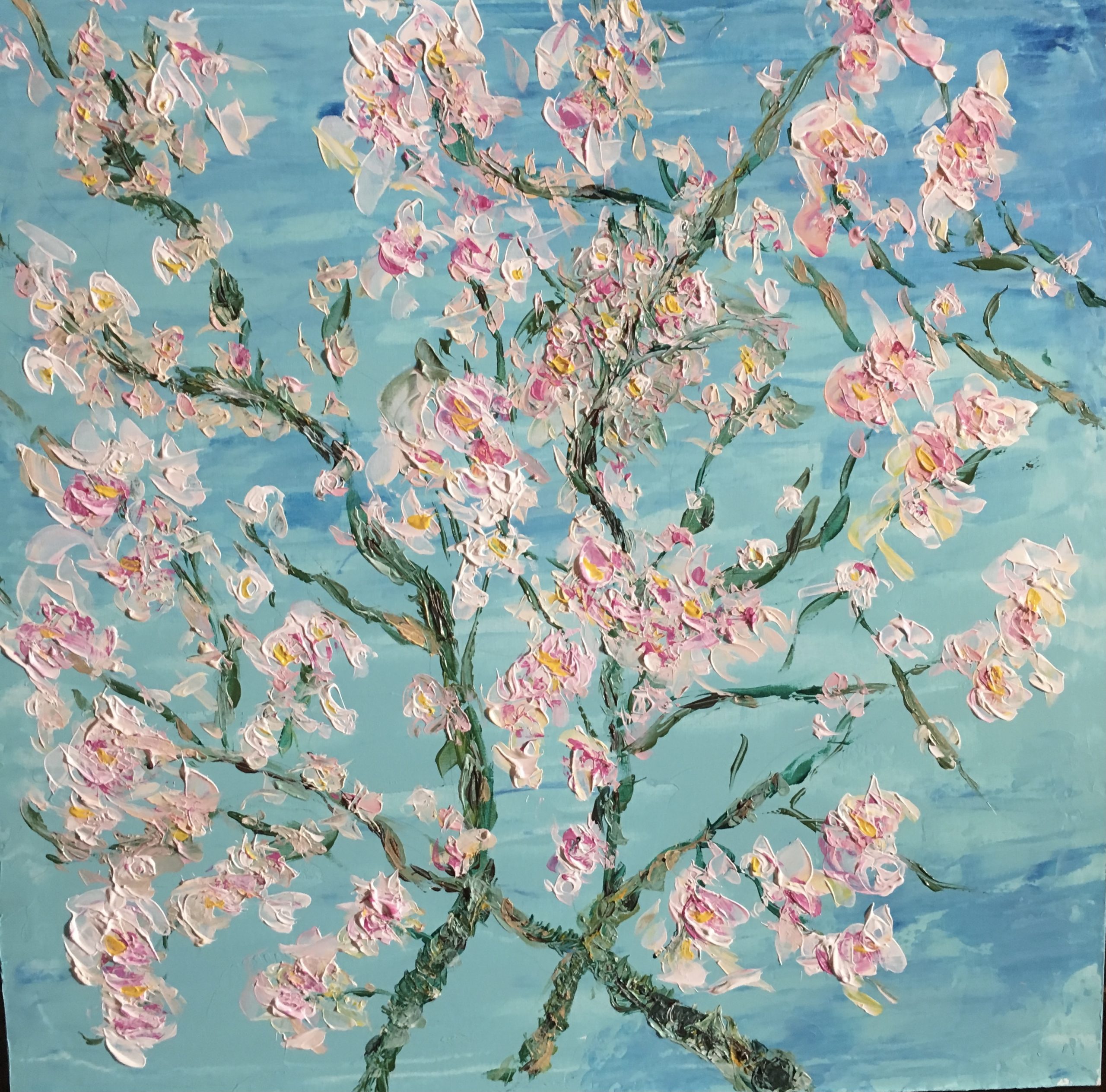
Van Gogh